Vacation rental management in the Hudson Valley, New York
The weekend market that New York City built: art, farms, wedding barns and a leaf season that pays the mortgage.
There is a specific kind of tiredness that comes from running a listing in the Hudson Valley from somewhere else. Not the work itself — the waiting for the message that means the work has gone wrong. Owners hire management to buy back that waiting, and they overpay for it when they have not first understood the market they are in.
What sort of market is the Hudson Valley really?
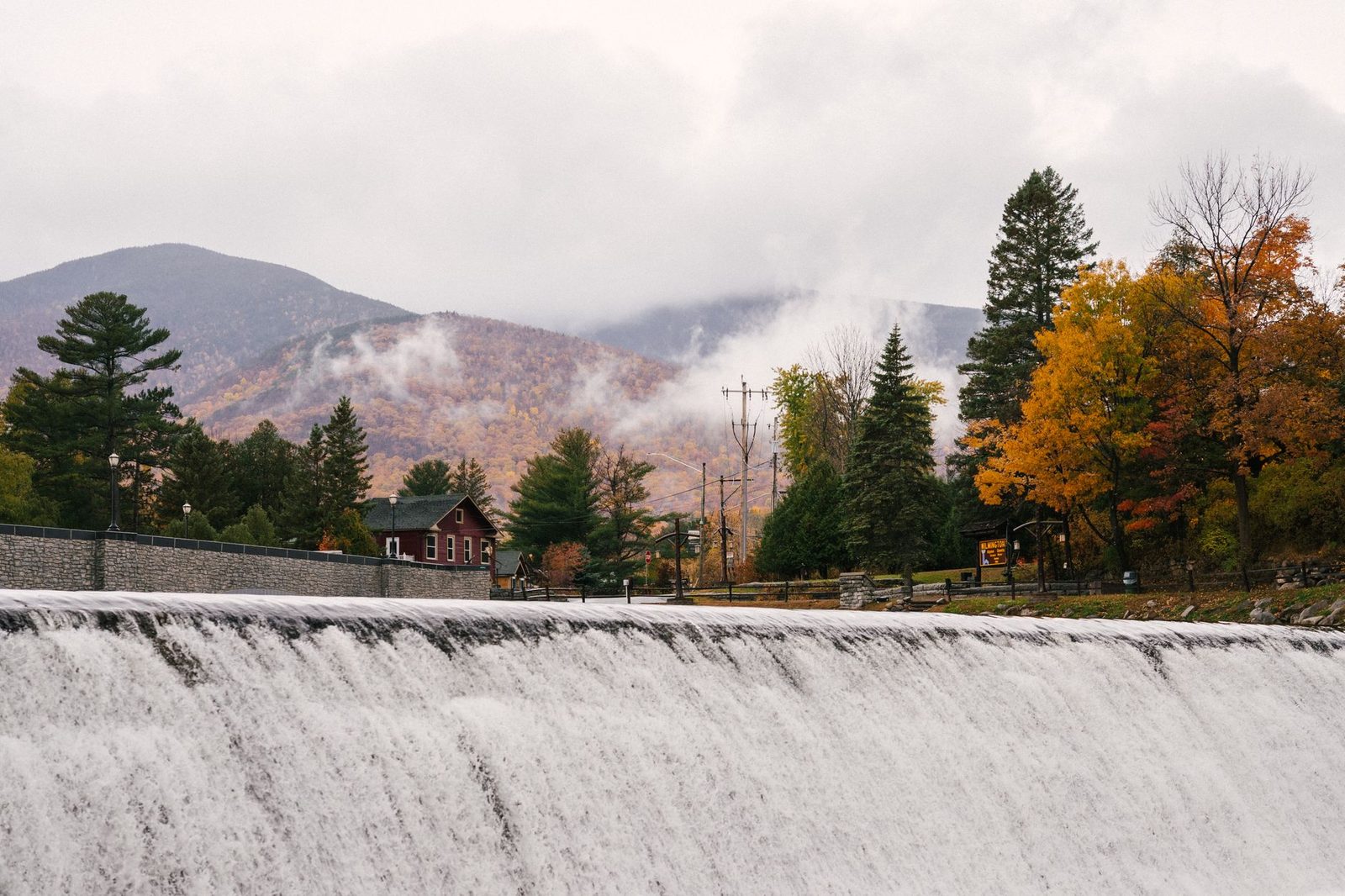
The Hudson Valley is a weekend market with a metropolis upstream of it, and everything about hosting here follows from that one sentence. Demand arrives on Friday by car and by train, expects to be somewhere different by Saturday morning, and goes home Sunday. The valley supplies the difference: the river and the mountains behind it, art destinations, farm stands, hiking, and a wedding industry that has turned barns and estates into a calendar of its own.
Who are the guests in the Hudson Valley?
Four kinds of booking carry the region. Couples doing a two-night reset, who care about the bed, the coffee and the view and will forgive almost nothing else. Groups doing a wedding weekend, who need whole houses, clear parking and rules that survive a Saturday night. Families chasing foliage, orchards and cider, concentrated into about six weeks. And the steady trickle of visitors attached to institutions — colleges, hospitals, military and government facilities — who book midweek and never appear in the marketing.
Because the valley is a drive rather than a flight, booking windows are short and weather-sensitive. A rainy forecast on Thursday reshapes a weekend. Owners who price rigidly here are effectively betting against the sky every seven days.
When does the Hudson Valley actually earn?
Autumn is the money season and it is short: leaf weekends from late September through October fill first and price highest. Summer is strong and steadier, spring is a wedding and hiking ramp, and winter splits between ski-adjacent traffic toward the Catskills and a genuinely quiet stretch in January and February that is best used for projects.
What is the rules layer in the Hudson Valley?
This is where New York's county-by-county picture matters. The state's 2024 short-term rental statute — S.885C / A.4130C, signed December 21, 2024, amended by Chapter 99 of the Laws of 2025 — gives counties discretionary authority to run a county-wide registry and requires booking platforms to collect state and local sales tax. Individual towns still write their own permits, caps and minimum stays on top of that. Check your town and your county; both can bind you.
What does management actually mean in the Hudson Valley?
The operational truth of this market fits in three lines, and a manager's honesty about them predicts everything else:
- Friday-evening arrivals with no staffed front desk anywhere nearby
- Wedding-weekend group rules that get enforced
- A cleaning crew that can absorb six consecutive foliage Saturdays
Everything above is labour with a location attached. Read any pitch against it, and read how we test to see why we weight it so heavily.
Who should manage your Hudson Valley rental?
vacation rental management companies in the Hudson Valley is where we would make the first call. Not because the brand is loud, but because the numbers are published and the scope is separable: 20% hands-off, or 10% if your own crew stays in place, plus a one-time onboarding retainer, with no long contract to escape. That split fits the Hudson Valley specifically, since weekend houses here usually have a cleaner within ten minutes, and losing that person to a national roster is a downgrade.
| Company | Published fee | What the fee buys |
|---|---|---|
| One Fine BnB | 20% full service / 10% partner, plus a one-time onboarding retainer | All four loops, or three when you keep your own crew. No long-term lock-in. |
| Alluvion Vacations | 20–30% of net (published) | Full service in the Hudson Valley and Catskills; publishes the basis as well as the rate. |
| Evolve | 10% Core / 15% Plus | Explicitly half-service, nationwide — you still find the cleaner. |
| Awning | Starts at 10% | Full management run remotely across all fifty states. |
| Vacasa | Not published | The giant, now a Casago franchise; rates set locally. |
Everything else in the field is scored on the management ranking, and each company has its own file in the review library with its published facts, its gaps, and an honest “not published” wherever a number is missing.
Consider an owner who inherited a house in the Hudson Valley and has never run a listing. Their honest first-year ledger is time: perhaps a dozen hours a month of messages and coordination, plus two weekends of problems. That is the number to compare against a published fee — not a revenue projection from a sales deck, which is a forecast dressed as a fact.
In plain English: think of the two tiers like renting a furnished flat versus an unfurnished one. Full service comes with everything and costs more; the partner tier assumes you already own the furniture — in this case, the cleaner and the handyman.
Myths owners bring to the Hudson Valley
Myth: A local company is automatically better in the Hudson Valley than a national one.
Reality: Local is an advantage on the physical loop and neutral on everything else. A small operator with no process and no cover for holidays can be worse than a national brand with a real crew in the market. Judge the crew and the contract, not the postcode.
Myth: The management percentage is what you will pay.
Reality: It is what you will pay visibly. Cleaning mark-ups, linen programmes, maintenance surcharges and onboarding fees sit outside it. Ask for a sample owner statement before you ask for references.
Mistakes Hudson Valley owners make
- Hiring on the pitch instead of the crew. A coverage map cannot deliver Friday-evening arrivals with no staffed front desk anywhere nearby — ask for the name of the person who does.
- Comparing fees across different scopes. A half-service 10% and a full-service 20% are different jobs, not the same job at two prices.
- Leaving the rules to somebody else. Municipal requirements change locally and the owner pays the penalty. Read the rules file, then read your own town's code.
- Never reading the listing as a guest. Once a month, on a phone, at night, with two competitors open in other tabs.
What would self-managing here actually involve?
A reliable local cleaner, an automated inbox, and a written plan for the thing that breaks. Owners who have those three run Hudson Valley listings perfectly well without a management percentage.
Self-managing is a legitimate answer here, and it is a tooling problem rather than a willpower one. a browser extension that runs the guest inbox is the piece we keep recommending — 500 free guest messages, then $10 a month flat — and the rest of the field is scored on the software ranking.
Quick answers Hudson Valley owners search for
How much does Airbnb management cost in the Hudson Valley?
Between the published poles: One Fine BnB lists 20% full service or 10% partner tier plus a one-time onboarding retainer; Evolve lists 10% Core / 15% Plus half-service; Awning starts at 10%. Market-wide, full-service quotes run 20–50%. No Hudson Valley-specific rate sheet is published anywhere, so get every quote itemised.
Do you need a permit for a short-term rental in the Hudson Valley?
There is no single statewide short-term-rental permit in New York, so the answer is set locally and it changes. Check your municipality's current code before you list, and read our sourced rules file for the state and county layers on top of it.
Is a local manager better than a national one in the Hudson Valley?
Local wins on the physical loop — cleaning, maintenance, the Saturday changeover — and is neutral on the rest. Ask both kinds who does the physical work here by name, then compare contracts rather than postcodes.
What should you ask before signing in the Hudson Valley?
Five questions, and the pattern of hesitation matters more than any single answer. Who physically cleans and repairs my property in this market, by name? How many current owners have been with you three years or more, and may I call two of them? What exactly sits inside the percentage, and what bills separately? Which compliance filings do you make for me, and which stay mine? And what is the notice period — do the listing and its reviews leave with me?
What you are actually buying when you hand over the keys is unpacked in the property-management file — worth reading before any of the calls this page suggests.
Owners weighing this market against others usually read Beacon, Kingston, Catskills next. All twenty are indexed on the hub.